
 United Kingdom
 Ireland
 The Netherlands
 Belgium
 Italy
Italy Germany
 Luxembourg
 Switzerland
 Middle East
 Saudi Arabia
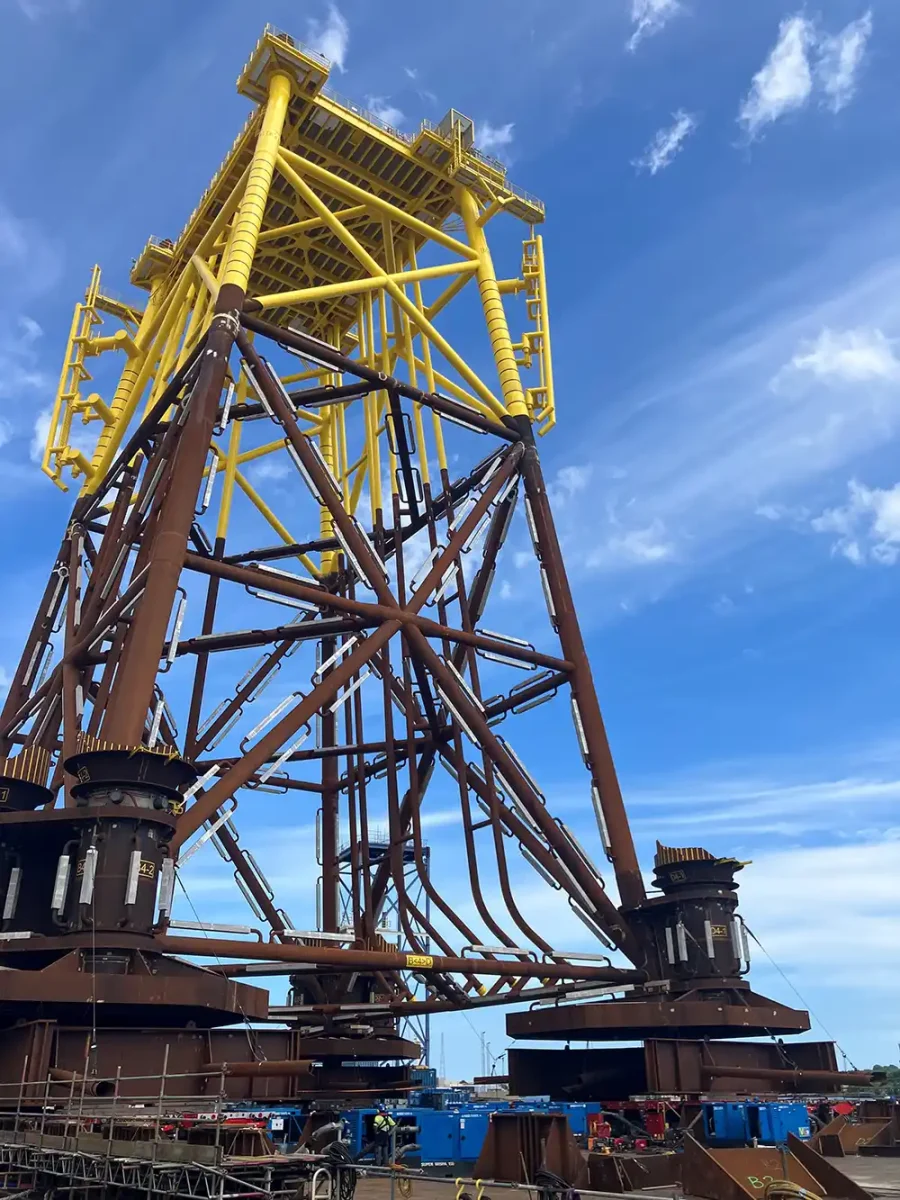
Moving ultra-heavy assets onto a barge demands more than capacity. It calls for careful control of trim and list, plus timing that respects tight tidal windows. When a major North East fabrication facility needed to transfer two 3,000-tonne modules on the River Tyne, they chose Sykes Pumps to keep the operation safe, stable and on time.
Need support now? Explore our pump hire range or see more marine applications on our Docks, Ports & Harbours page.
The challenge
Each module placed significant stress on the vessel, with shifting loads creating a risk of listing during placement. The team also had to work within tidal windows on the Tyne, while keeping one eye on weather so that the programme remained on track. Given the critical nature of the operation, any equipment failure could have led to costly delays, so robust contingency planning was essential.
Our approach
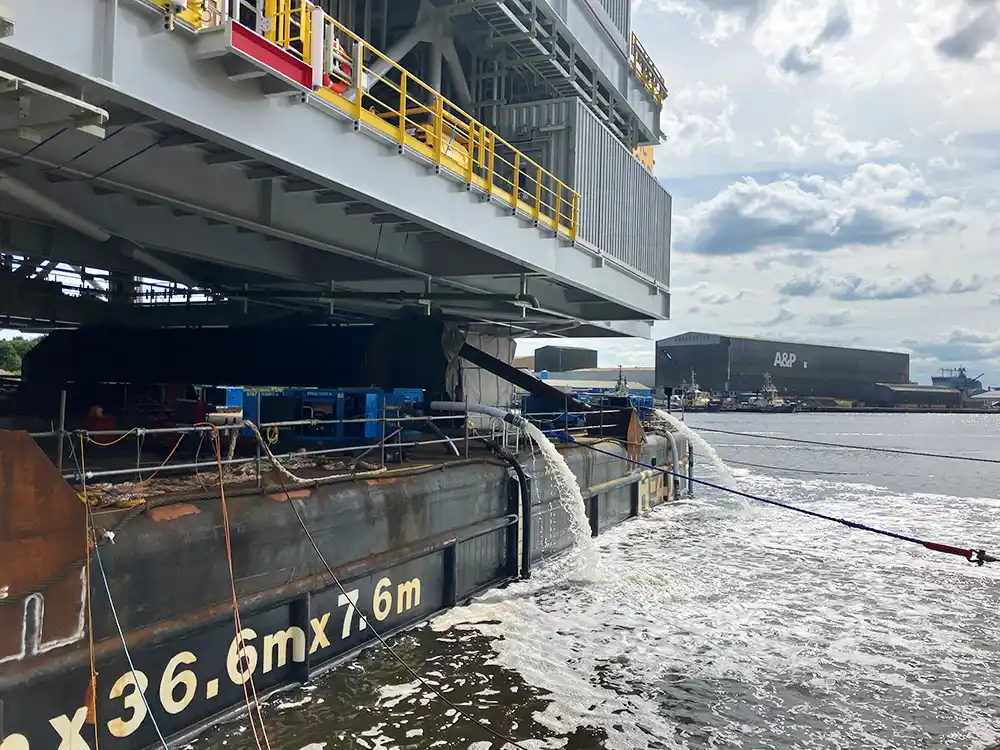
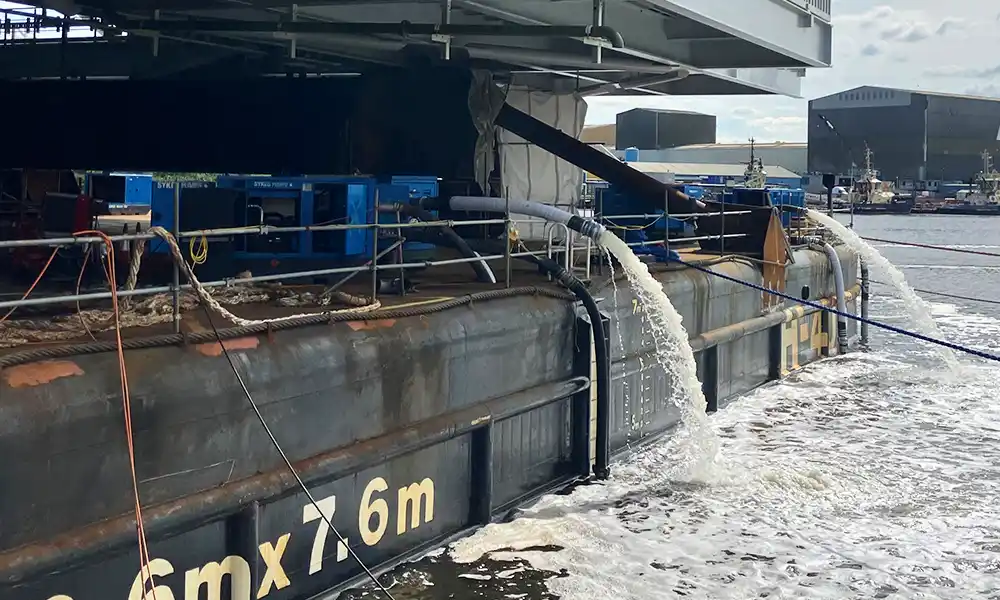
Following a site visit, our engineers designed a precision ballasting plan that matched the lifting sequence and tide times. We deployed 28 high-capacity pumps in total: 10 × HP150 Super Silenced and 18 × Super Wispaset 200 Ecotec, positioned to manage weight distribution throughout the load-out. The set-up allowed continuous control of trim and list, keeping the barge level as the modules were manoeuvred into place. A dedicated service engineer was present during each transfer to provide immediate technical support and maintain continuity.
- Equipment used
- HP150 Super Silenced
- Super Wispaset 200 Ecotec
The result
Both modules were loaded smoothly and without interruption. The barge remained steady and balanced throughout, and the modules were secured and dispatched offshore on schedule. All client objectives were achieved with no delays or incidents.
Project highlight: Real-time ballasting held the vessel level as each 3,000-tonne module was positioned, delivering a controlled and confident load-out within tight tidal windows.
Why this matters in docks, ports and harbours
Marine heavy lifts succeed when water transfer is matched to the choreography of the lift. The right pumps, a clear balancing plan and on-site expertise help operations proceed safely and predictably, even when windows are short and conditions are variable.
Lessons for similar projects
- Engineer the sequence, not only the kit. Ballasting must follow the lift plan and the tide timetable.
- Build resilience into the set-up. On-site specialists and contingency capacity reduce the risk of stoppages.
Frequently asked questions
How do you keep a barge level during a heavy load-out?
By transferring water between tanks with high-capacity pumps in real time. This counters changing loads and maintains control of trim and list, planned against tide times and lift stages.
Which pumps support precision ballasting?
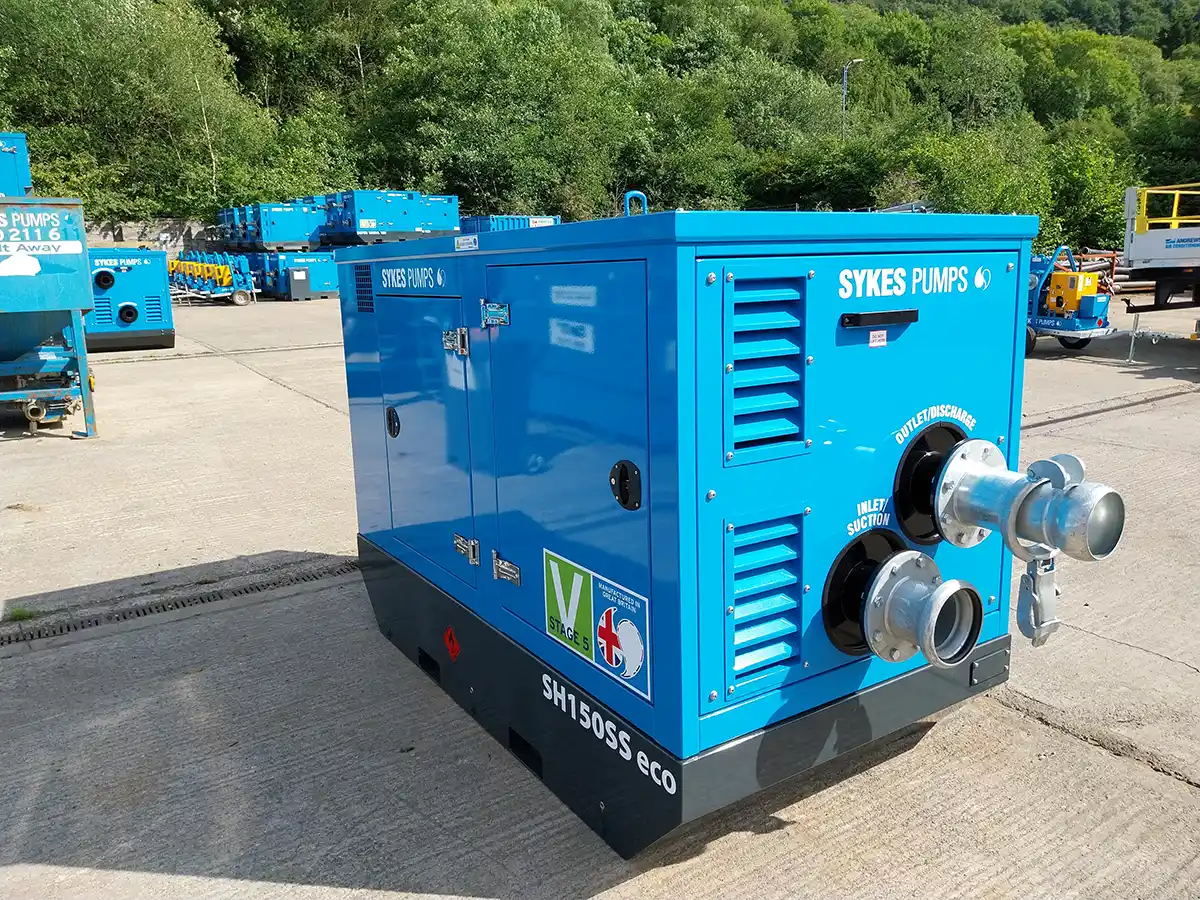
Quiet, reliable units with strong flow and rapid response are ideal. On this project we used the HP150 Super Silenced and Super Wispaset 200 Ecotec, which provided the control and reliability required.
Talk to us
Planning a marine load-out or port operation? Call 0800 211 611 or browse our pump hire range. You will also find this case study under Docks, Ports & Harbours.
Download Case Study – Precise ballasting keeps 3,000-tonne modules on schedule on the River Tyne